
Pass Linux Foundation CKA Exam Info and Free Practice Test
New 2024 Latest Questions CKA Dumps - Use Updated Linux Foundation Exam
The Importance of CNCF CKA Certification Exam
The CNCF Certified Kubernetes Administrator exam will provide a great opportunity to those who want to be part of the cloud-native revolution. The certification is a step closer towards the goal of becoming a certified engineer or operations professional. Management of infrastructure running in production environments with Kubernetes is a huge priority for enterprises today. Deploying Kubernetes on behalf of an enterprise will provide enormous value and cost savings. Advised to be prepared to take the CNCF Certified Kubernetes Administrator exam, candidates should know how to deploy, manage, and troubleshoot applications on Kubernetes clusters. CNCF CKA exam dumps will help the candidate in passing the CNCF Certified Kubernetes Administrator exam. Personally, it is a great deal. Check out the official study guide and practice as much as possible for the exam. Viewing and practicing as much as possible will increase the odds of passing the CNCF Certified Kubernetes Administrator exam. Start studying for the exam well in advance to avoid cramming before the exam. This will help relieve stress and help you to perform better.
Publish date of the content on the website is subject to change without notice. Role of the website is to offer candidates information about Brightwork. Master the content of the study guide and pass the certification exam. The worker role will be to apply the study guide knowledge to passing the CNCF Certified Kubernetes Administrator exam. Command of Kubernetes will also be crucial in playing a role in the successful management of applications on clusters. Stateful applications are deployed onto Kubernetes by using one of the available storage classes.
The CKA exam is designed to test the candidate's ability to deploy, configure, and manage Kubernetes clusters. CKA exam is a hands-on, performance-based test where the candidate must complete a set of tasks within a given time frame. The tasks include creating and managing clusters, pods, services, and deployments, troubleshooting issues, and securing the Kubernetes environment.
NEW QUESTION # 33
Create a Pod with three busy box containers with commands "ls; sleep 3600;", "echo Hello World; sleep 3600;" and "echo this is the third container; sleep 3600" respectively and check the status
- A. // first create single container pod with dry run flag
kubectl run busybox --image=busybox --restart=Always --dry-run
-o yaml -- bin/sh -c "sleep 3600; ls" > multi-container.yaml
// edit the pod to following yaml and create it
apiVersion: v1
kind: Pod
metadata:
labels:
run: busybox
name: busybox
spec:
containers:
- args:
- bin/sh
- -c
- ls; sleep 3600
- echo Hello world; sleep 3600
image: busybox
name: busybox-container-2
- args:
- bin/sh
- -c
- echo this is third container; sleep 3600
image: busybox
name: busybox-container-3
restartPolicy: Always
// Verify
Kubectl get pods - B. // first create single container pod with dry run flag
kubectl run busybox --image=busybox --restart=Always --dry-run
-o yaml -- bin/sh -c "sleep 3600; ls" > multi-container.yaml
// edit the pod to following yaml and create it
apiVersion: v1
kind: Pod
metadata:
labels:
run: busybox
name: busybox
spec:
containers:
- args:
- bin/sh
- -c
- ls; sleep 3600
image: busybox
name: busybox-container-1
- args:
- bin/sh
- -c
- echo Hello world; sleep 3600
image: busybox
name: busybox-container-2
- args:
- bin/sh
- -c
- echo this is third container; sleep 3600
image: busybox
name: busybox-container-3
restartPolicy: Always
// Verify
Kubectl get pods
Answer: B
NEW QUESTION # 34
Get the pods with labels env=dev and env=prod and output the labels as well
Answer:
Explanation:
kubectl get pods -l 'env in (dev,prod)' --show-labels
NEW QUESTION # 35
Score: 4%
Task
Scale the deployment presentation
Answer:
Explanation:
See the solution below.
Explanation
Solution:
kubectl get deployment
kubectl scale deployment.apps/presentation --replicas=6
NEW QUESTION # 36
Score: 5%
Task
From the pod label name=cpu-utilizer, find pods running high CPU workloads and write the name of the pod consuming most CPU to the file /opt/KUTR00401/KUTR00401.txt (which already exists).
Answer:
Explanation:
See the solution below.
Explanation
Solution:
kubectl top -l name=cpu-user -A
echo 'pod name' >> /opt/KUT00401/KUT00401.txt
NEW QUESTION # 37
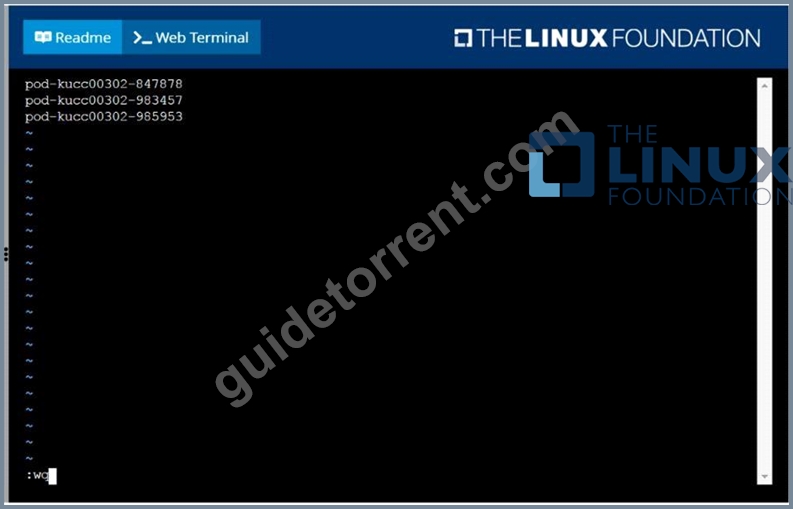
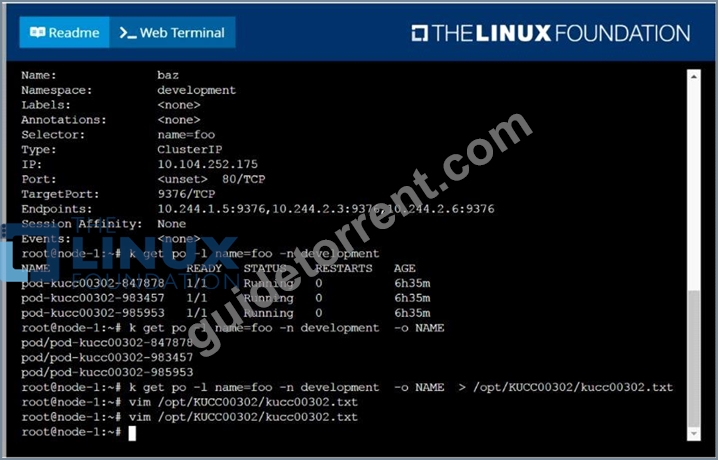
Create a file:
/opt/KUCC00302/kucc00302.txt that lists all pods that implement service baz in namespace development.
The format of the file should be one pod name per line.
Answer:
Explanation:
solution
NEW QUESTION # 38
An administrator accidentally closed the commit window/screen before the commit was finished. Which two options could the administrator use to verify the progress or success of that commit task? (Choose two)
- A. System Logs
- B. Task Manager
- C. Configuration Logs
- D. Traffic Logs
Answer: B,C
NEW QUESTION # 39
Updates to dynamic user group membership are automatic therefore using dynamic user groups instead of static group objects allows you to:
- A. respond to changes in user behavior and confirmed threats with manual policy changes
- B. respond to changes in user behavior or potential threats without automatic policy changes
- C. respond to changes in user behavior or potential threats without manual policy changes
- D. respond to changes in user behavior or potential threats using manual policy changes
Answer: C
NEW QUESTION # 40
Create a secret mysecret with values user=myuser and password=mypassword
- A. kubectl create secret generic my-secret --fromliteral=username=user --from-literal=password=mypassword
// Verify
kubectl get secret generic my-secret -o yaml - B. kubectl create secret generic my-secret --fromliteral=username=user --from-literal=password=mypassword
// Verify
kubectl get secret --all-namespaces
kubectl get secret generic my-secret -o yaml
Answer: B
NEW QUESTION # 41
Change the Image version to 1.15-alpine for the pod you just created and verify the image version is updated.
- A. Kubect1 set image pod/nginx nginx=nginx:1.15-alpine
kubect1 describe po nginx
// another way it will open vi editor and change the version
kubeclt edit po nginx
kubect1 describe po nginx - B. Kubect1 set image pod/nginx nginx=nginx:1.15-alpine
kubect1 describe po nginx
// another way it will open vi editor and change the version
kubect1 describe po nginx
Answer: A
NEW QUESTION # 42
Create a snapshot of the etcd instance running at https://127.0.0.1:2379, saving the snapshot to the file path
/srv/data/etcd-snapshot.db.
The following TLS certificates/key are supplied for connecting to the server with etcdctl:
CA certificate: /opt/KUCM00302/ca.crt
Client certificate: /opt/KUCM00302/etcd-client.crt
Client key: Topt/KUCM00302/etcd-client.key
Answer:
Explanation:
See the solution below.
Explanation
solution
F:\Work\Data Entry Work\Data Entry\20200827\CKA\18 C.JPG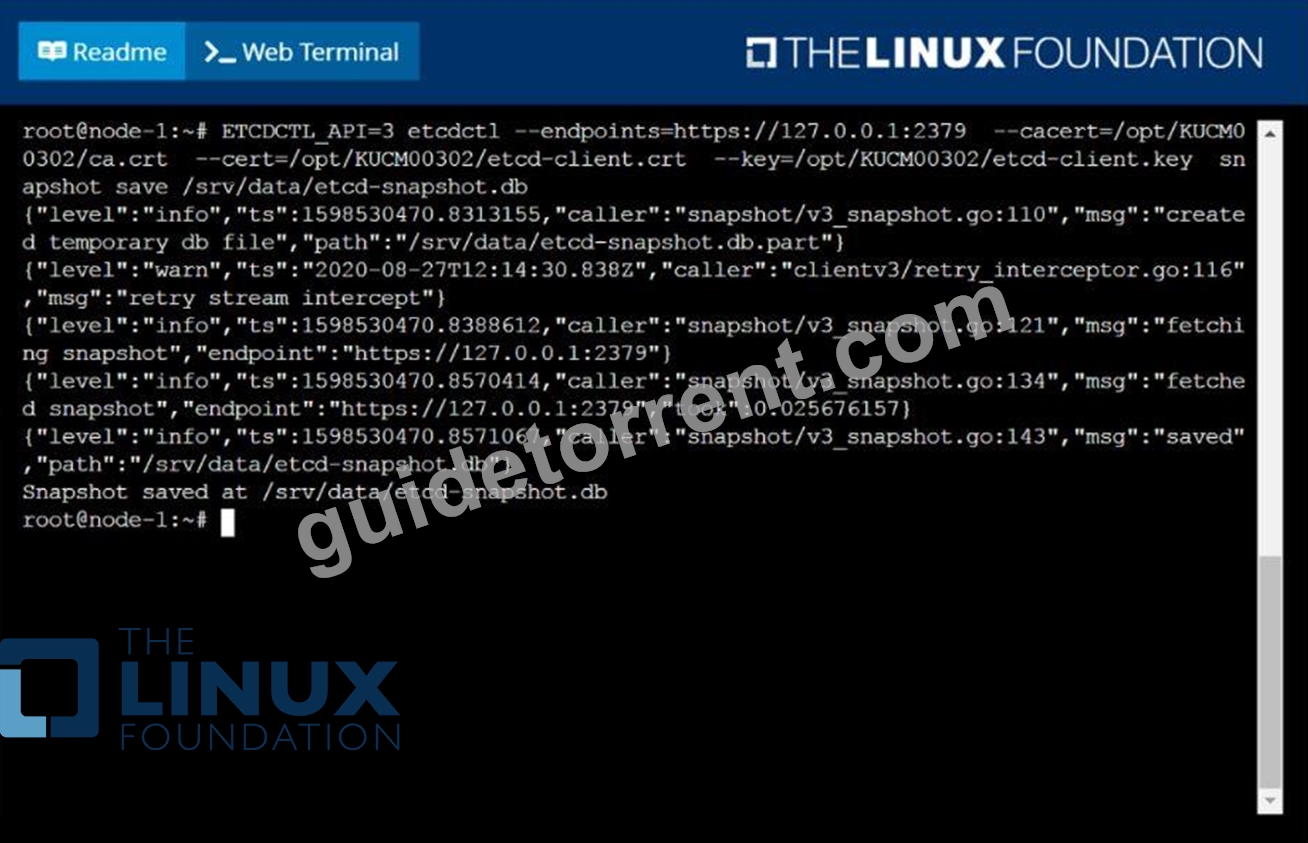
NEW QUESTION # 43
Get the list of pods of webapp deployment
- A. // Get the label of the deployment
kubectl get deploy --show-labels
kubectl get pods -l app=webapp - B. // Get the label of the deployment
kubectl get deploy --show-labels
// Get the pods with that label
kubectl get pods -l app=webapp
Answer: B
NEW QUESTION # 44
Fix a node that shows as non-ready
- A. Kubectl get nodes
// Check which node shows a not ready
kubectl describe nodes "node-name"
// Login to the node which shows as not ready and check the
systemctl start kubelet / docker
// Verify
ps -auxxww | grep -i "process-name"
kubectl get nodes - B. Kubectl get nodes
// Check which node shows a not ready
kubectl describe nodes "node-name"
// Login to the node which shows as not ready and check the
process for kubelet, docker , kube-proxy.
// systemctl status kubelet (or) ps -aux | grep -i "processname"
// If the process is not started, then start using
systemctl start kubelet / docker
// Verify
ps -auxxww | grep -i "process-name"
kubectl get nodes
Answer: B
NEW QUESTION # 45
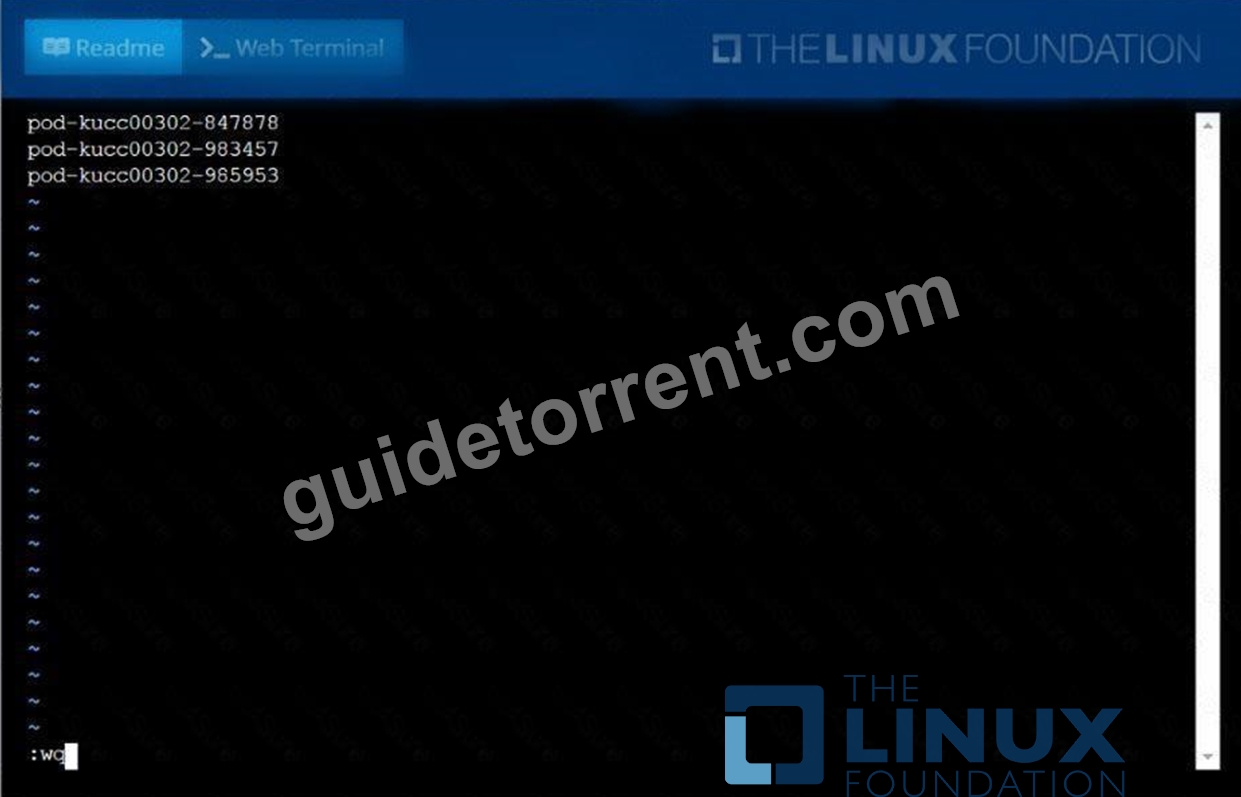
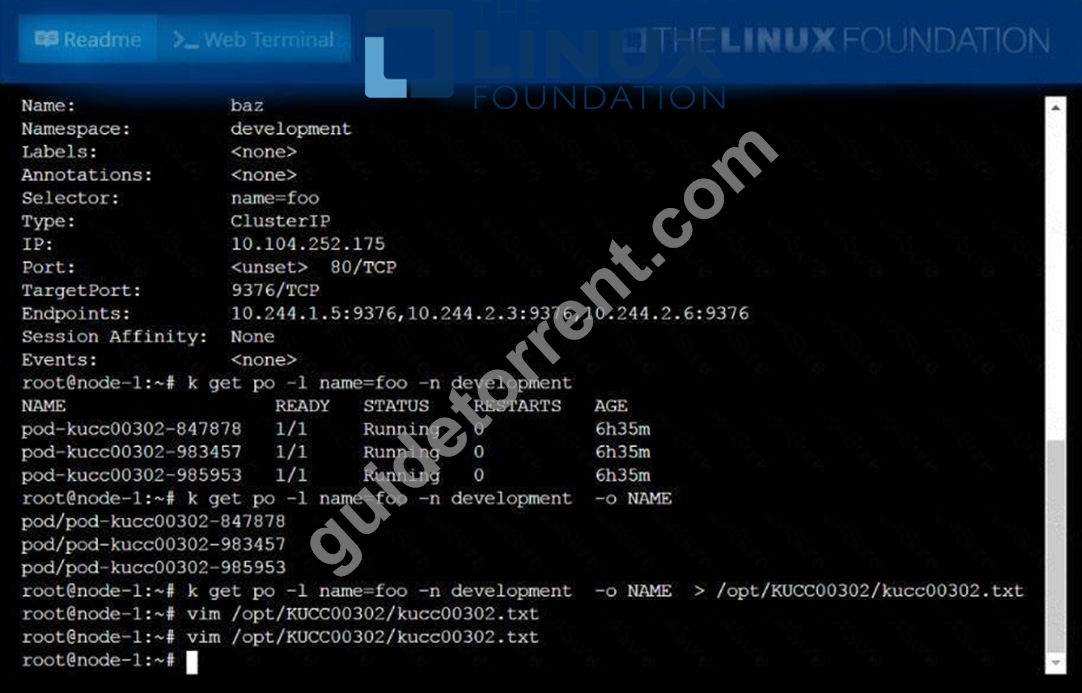
Create a file:
/opt/KUCC00302/kucc00302.txtthatlists all pods that implement servicebazin namespacedevelopment.
The format of the file should be onepod name per line.
Answer:
Explanation:
See the solution below.
Explanation
solution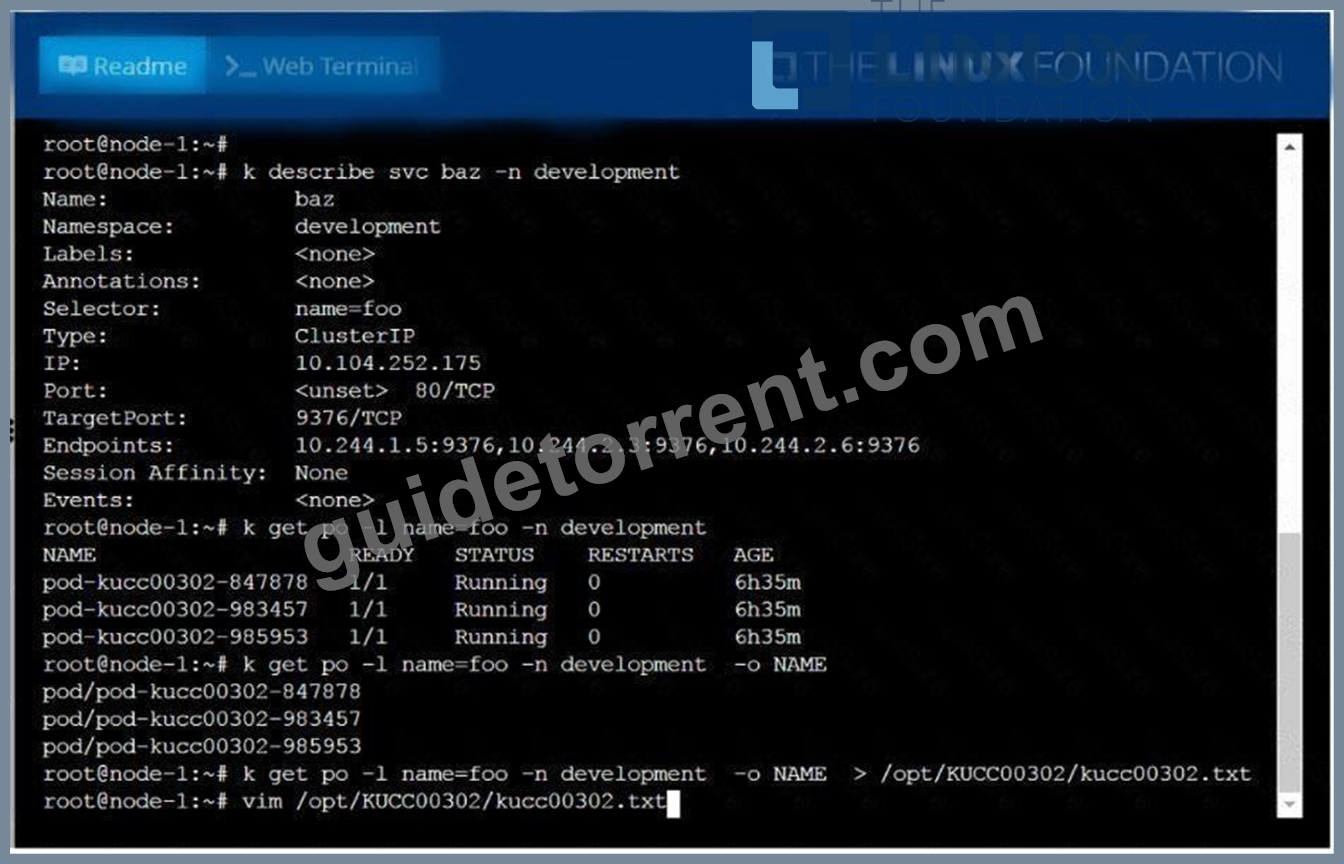
NEW QUESTION # 46
Perform the following tasks:
Add an init container to hungry-bear defined in spec file
/opt/KUCC00108/pod-spec-KUC
The init container should create /workdir/calm.txt
If /workdir/calm.txt is not
Once the spec file has been definition, the pod should be created
Answer:
Explanation:
See the solution below.
Explanation
solution
F:\Work\Data Entry Work\Data Entry\20200827\CKA\4 B.JPG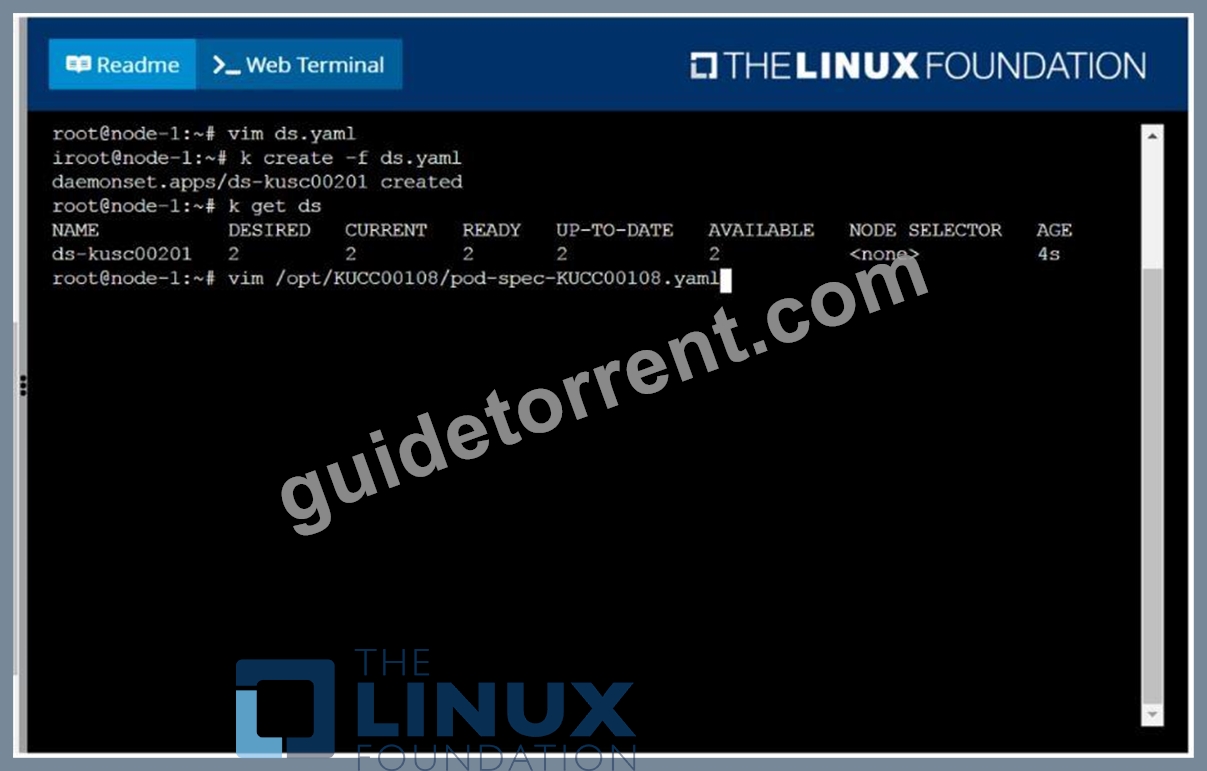
F:\Work\Data Entry Work\Data Entry\20200827\CKA\4 C.JPG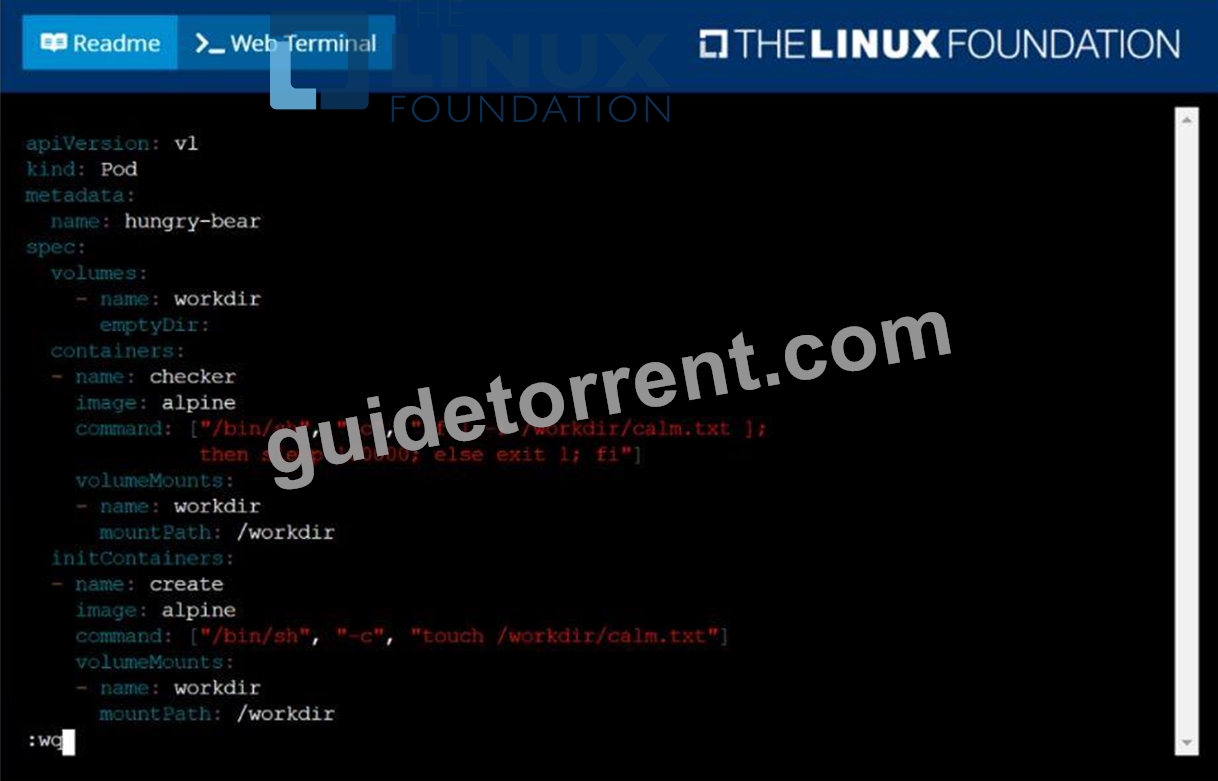
F:\Work\Data Entry Work\Data Entry\20200827\CKA\4 D.JPG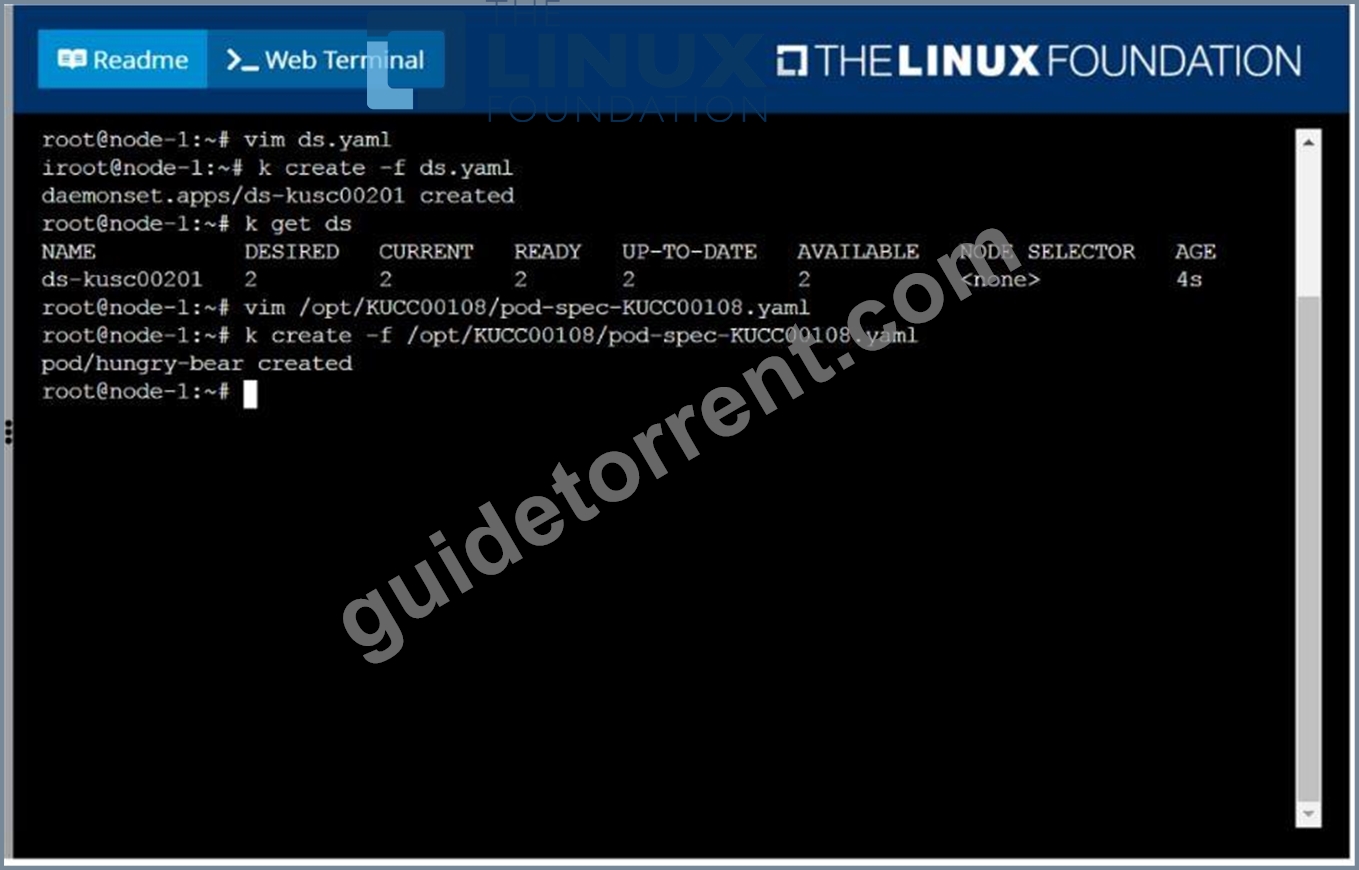
NEW QUESTION # 47
Create a deployment as follows:
* Name:nginx-random
* Exposed via a servicenginx-random
* Ensure that the service & podare accessible via theirrespective DNS records
* The container(s) within anypod(s) running as a part of thisdeployment should use thenginxImage Next, use the utilitynslookupto lookup the DNS records of the service &pod and write the output to
/opt/KUNW00601/service.dnsand/opt/KUNW00601/pod.dnsrespectively.
Answer:
Explanation:
See the solution below.
Explanation
Solution: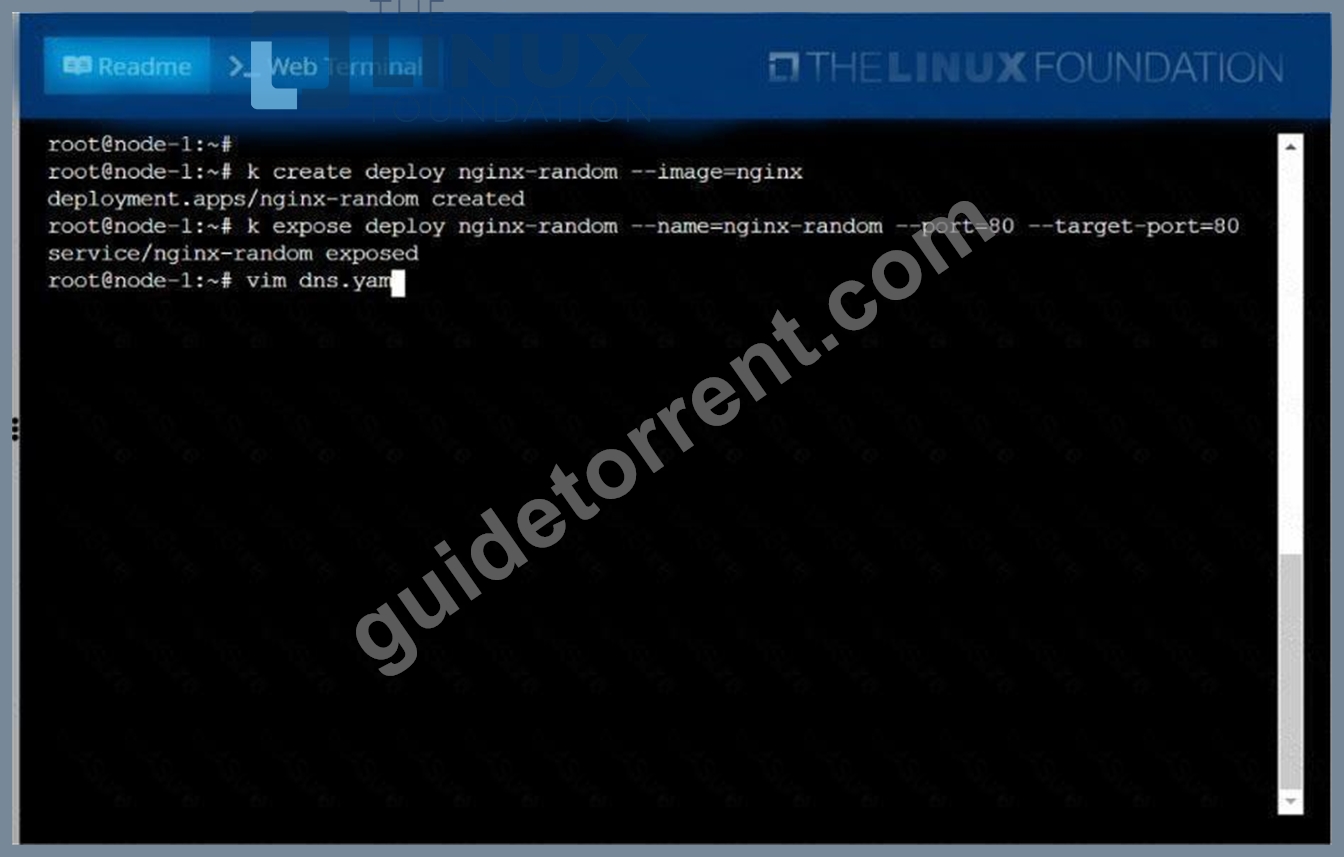
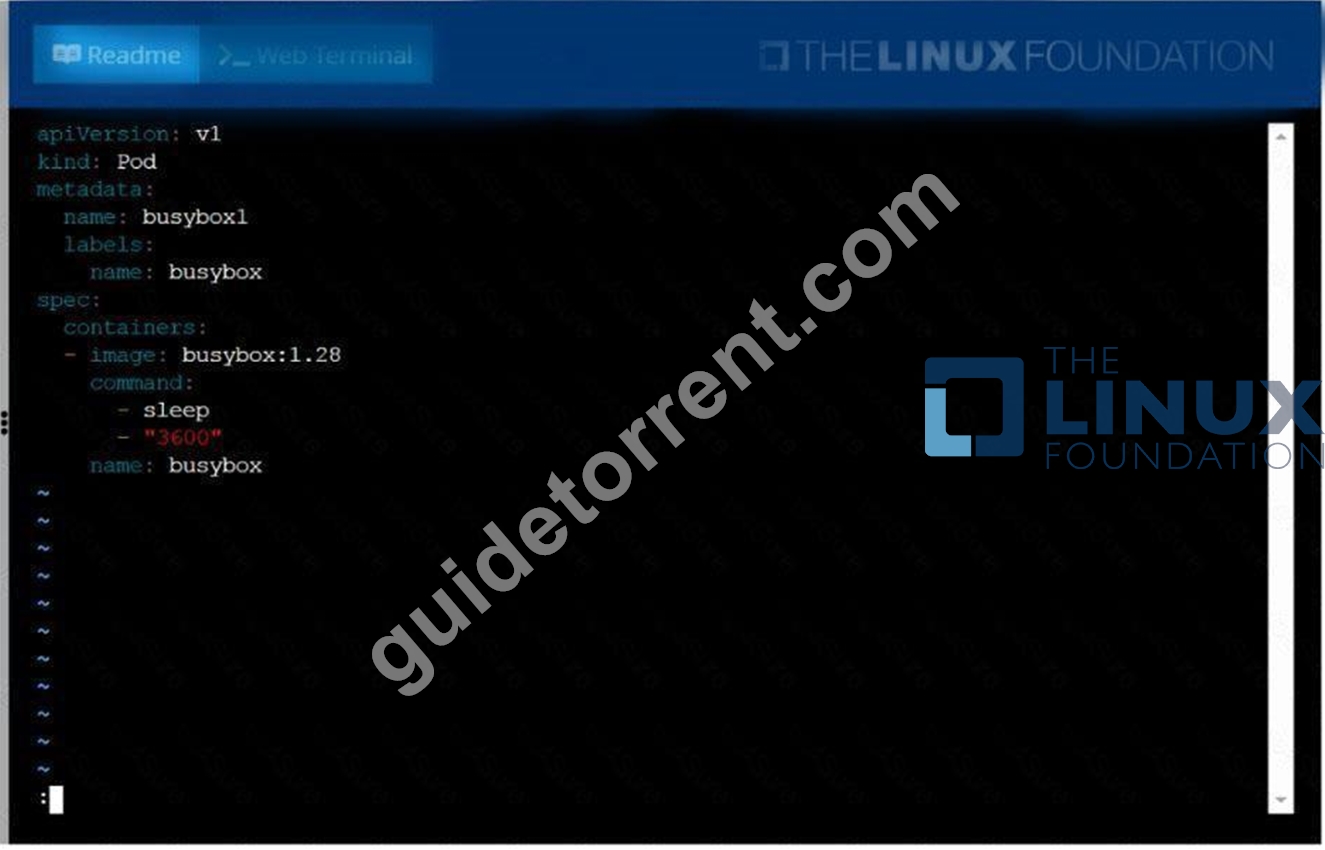
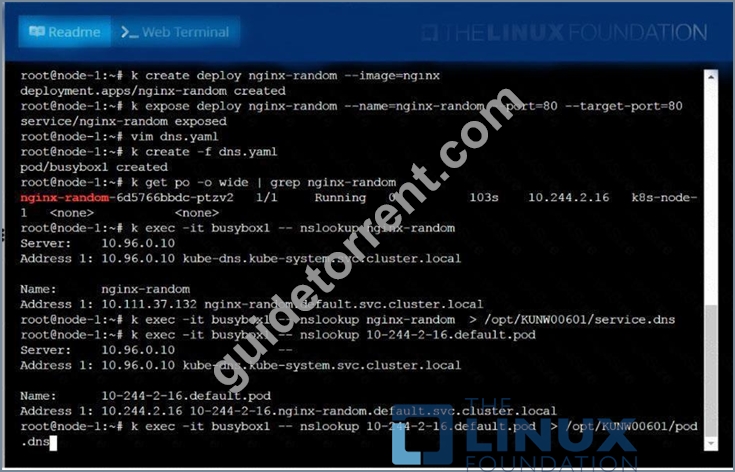
NEW QUESTION # 48
Scale the deployment to 5 replicas
Answer:
Explanation:
kubectl scale deployment webapp -replicas=5 //Verify kubectl get deploy kubectl get po,rs
NEW QUESTION # 49
Check logs of each container that "busyboxpod-{1,2,3}"
- A. kubectl logs busybox -c busybox-container-1
kubectl logs busybox -c busybox-container-2
kubectl logs busybox -c busybox-container-3 - B. kubectl logs busybox -c busybox-container-1
kubectl logs busybox -c busybox-container-3
kubectl logs busybox -c busybox-container-3
Answer: A
NEW QUESTION # 50
......
The CKA certification exam is a challenging test that requires candidates to demonstrate their mastery of Kubernetes. CKA exam covers a wide range of topics, including installation, configuration, and management of Kubernetes clusters. It also tests a candidate's ability to work with the Kubernetes API, troubleshoot common issues, and perform advanced tasks such as scaling and rolling updates.
Latest CKA Exam Dumps Linux Foundation Exam: https://www.guidetorrent.com/CKA-pdf-free-download.html
Pass Linux Foundation CKA PDF Dumps Recently Updated 68 Questions: https://drive.google.com/open?id=1FU549XKzrBJnXj8A6-vlxzTp2zwbxjBH